
The ambition of the MRGM is to decipher the molecular mechanisms laying at the root of the pathophysiology of rare diseases and make our findings worth for patients.

Research at MRGM (INSERM U1211) lays on 2 branches:
-
In the Genetic anomalies of Development axe, we are identifying and characterizing candidate genes that are linked to various rare diseases including albinism, Oculo-Auriculo-Vertebral Spectrum (OAVS), Rubinstein-Taybi syndrome, and pathologies associated to RAS dysfunction.
-
In the innate errors of mitochondrial metabolism axe, we are investigating how mitochondrial bioenergetics and dynamics govern fundamental cellular functions involved in rare diseases, cancer and immune responses. One part is more physiopathological: genetic and biochemical alterations of altered metabolic pathways. The other part is more fundamental: analysis of the biochemical pathways of energy and lipid metabolism.
The MRGM closely intertwines with patient associations and the University of Bordeaux to anchor in the society. Together with the Genetic Department of the Public Hospital of Bordeaux, the MRGM is part of the French Centers of References for Developmental Anomalies (SOOR), Neurogenetic Diseases (NEUROGENE), and Mitochondrial Diseases (CARAMMEL and Wolfram syndrome), thereby contributing in improving public health system and patient care.
Our aim is to improve diagnosis, reveal new targets, and develop new drugs for the treatment of rare diseases.
We are on LinkedIn

MRGM leaves X. Follow us on Linkedin.

https://www.linkedin.com/company/mrgm-france/mycompany/?viewAsMember=true

COLLOQUE « RECHERCHE & MALADIES RARES »
Pessac (Bordeaux). Dr Julien Van Gils. Identification de biomarqueurs pour le diagnostic dusyndrome de Rubinstein-Taybi. Plus d’information : symdrome Rubinstein-Taby

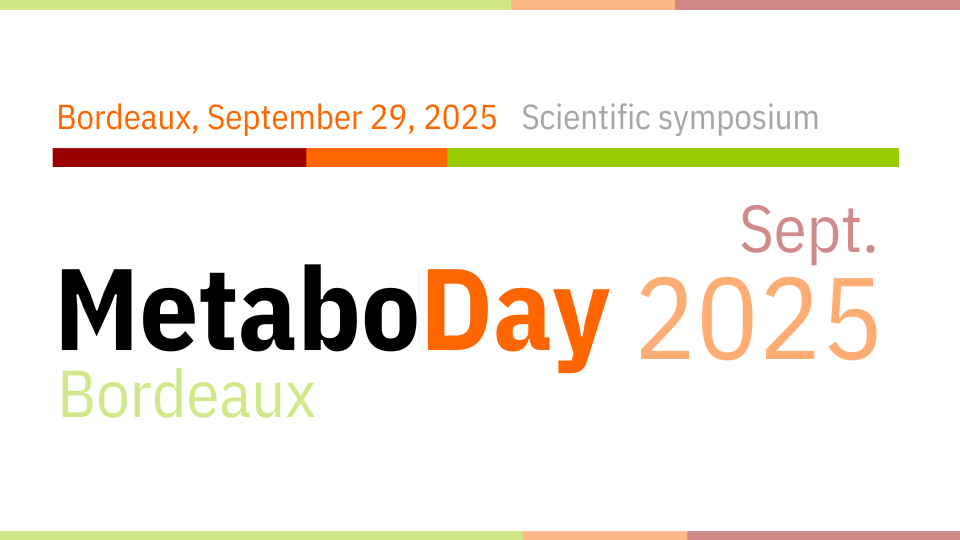
METABODAY 2025
Notre Directeur d’Unité, le Professeur Didier Lacombe (Université de Bordeaux, INSERM U1211), est intervenu dans le cadre de la journée MetaboDay sur l’ASMD B (maladie de Niemann-Pick de type B) : du diagnostic au traitement. Plus d’informations : le Déficit en sphingomyélinase acide
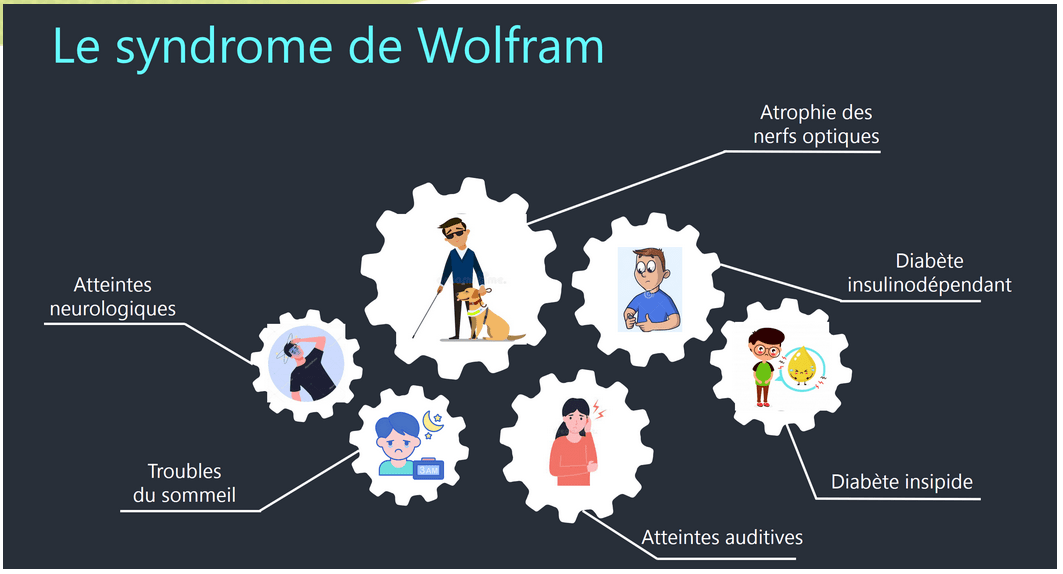
SYNDROME DE WOLFRAM
Le Dr Rodrigue Rossignol va diriger une thèse à partir de septembre en relation avec le syndrome de Wolfram. Orphanet : le syndrome de Wolfram
 Rare Diseases: Genetics and Metabolism